
Have you ever stood near the water and felt relaxed and slightly exposed at the same time? The view pulls you in, the air feels lighter, and everything slows down just a bit. But there’s also movement you can’t control. Wind shifts. Moisture hangs around longer. The ground feels less certain under your feet.
That mix of calm and unpredictability carries over into building near water. The appeal is obvious, but the conditions don’t stay in the background. Water changes how land behaves, how materials age, and how buildings respond over time. It’s not dramatic at first. Most of the challenges show up slowly, in small ways that compound.
Designing in these environments asks for restraint. Less about showing off. More about paying attention. The homes that last near water tend to feel settled, like they belong there, rather than placed there. That difference usually starts well before the first wall goes up.
Why Working With an Architect Changes the Direction Early On
Building near water isn’t just a variation of a standard residential project. It comes with a different set of pressures that affect nearly every decision, especially early ones. That’s why working with a waterfront home architect often shapes the entire direction of the build, long before finishes or layouts are discussed.
Shoreline sites come with layers that aren’t always visible at first glance. Flood zones overlap. Soil behaves differently. Local regulations can be strict and specific, especially around setbacks and environmental impact. Someone experienced in waterfront design knows where those limits are firm and where there’s room to adapt.
Early design choices also influence how the home holds up over time. Elevation decisions affect insurance and safety. Orientation affects comfort and durability. Structural systems determine how the building responds to wind and moisture year after year. When those choices are made with the site in mind, the home feels less reactive and more prepared. It doesn’t fight the environment. It lives alongside it.
The Land Isn’t a Blank Canvas Near Water
Near water, land stays active. Water tables rise and fall. Soil shifts. Drainage patterns change with seasons and storms. Treating a waterfront site like a static surface usually leads to issues later, even if everything looks fine at the start.
Understanding the land becomes a process of observation. Where does water collect after rain? Which areas dry quickly, and which stay damp? How does the ground feel underfoot in different spots? These details guide decisions about foundations, grading, and even outdoor use.
Ignoring them doesn’t cause immediate failure. It creates slow stress. Foundations shift. Drainage struggles. Landscaping never quite settles. When the land is understood first, the structure that follows feels anchored rather than imposed.
Letting Water and Wind Do What They Do
Water changes how the weather behaves. Wind moves faster over open surfaces. Storms feel more intense. Humidity lingers. Good design near water doesn’t try to block all of that out.
Orientation matters more here. Catching breezes reduces cooling demands. Overhangs manage sun and rain. Roof shapes influence how wind moves across the structure. Small choices affect daily comfort more than people expect.
Sealing everything tightly can create new problems. Moisture needs a way out. Homes that allow controlled airflow tend to feel better long term. Comfort near water usually comes from moderation, not resistance.
Materials That Don’t Rush to Fail
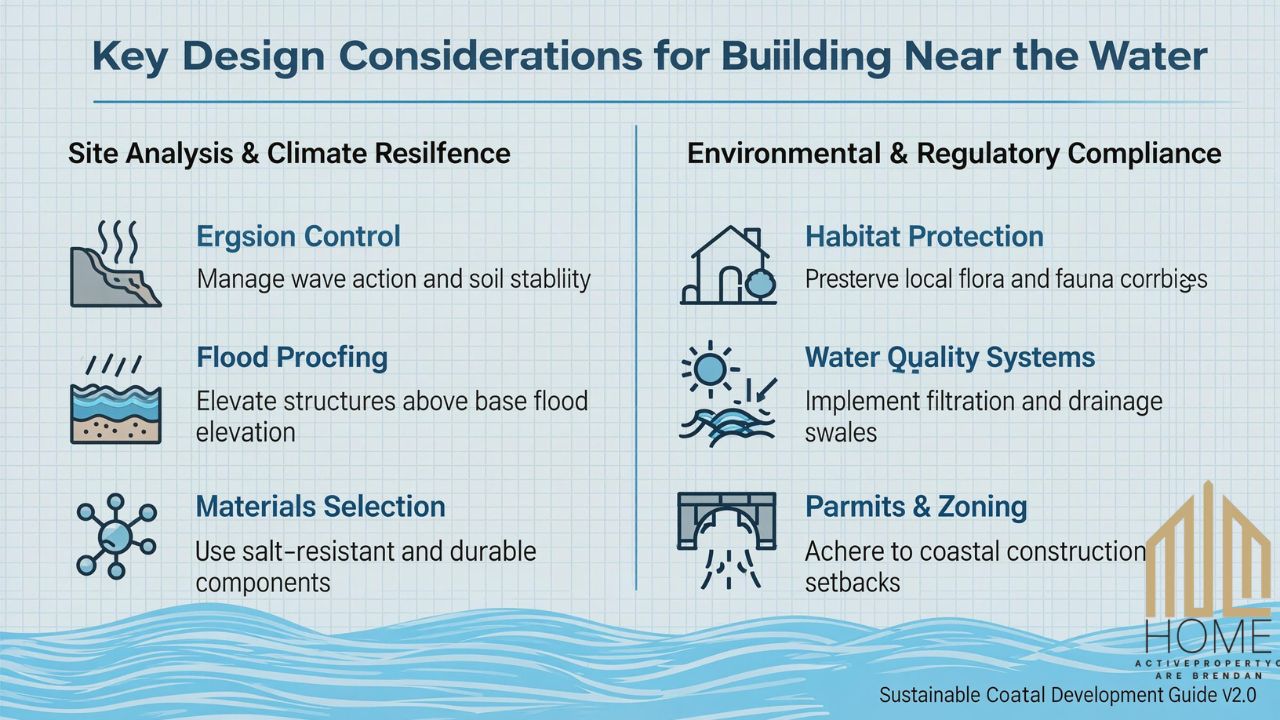
Materials near water get tested constantly. Salt, moisture, and sun speed up wear. What works inland may struggle along a shoreline.
That’s why material selection becomes less about appearance and more about how things age. Corrosion-resistant metals last longer. Woods that handle moisture reduce warping. Finishes that breathe prevent trapped humidity.
Maintenance is part of waterfront living. The goal isn’t avoiding it completely, but choosing materials that don’t demand constant attention. When materials age evenly and predictably, the home stays comfortable instead of feeling fragile.
Elevation Isn’t Just About Flooding
Elevation near water affects more than safety. It influences how a home feels, how it’s accessed, and how it relates to its surroundings. Building above flood levels protects the structure and reduces long-term risk, but it also introduces design challenges.
The most successful designs integrate elevation naturally. Stairs and transitions feel intentional. Outdoor spaces remain usable. The home stays connected to the water without being vulnerable to it.
Resilience isn’t about expecting disaster. It’s about planning for uncertainty. Homes designed with future conditions in mind tend to age better, both structurally and emotionally.
Views Are a Gift, Not a Requirement Everywhere
Near water, the instinct is to open everything up. More glass. Fewer barriers. While that looks appealing, it often creates discomfort later.
Too much exposure brings heat, glare, and privacy concerns. Maintenance increases. Interiors become harder to manage. Framing views instead of maximizing them tends to work better over time.
Strategic window placement, shading elements, and layered openings allow connection without overwhelm. The best views are the ones that stay comfortable year after year.
The Environment Is Part of the Design
Waterfront homes don’t sit on neutral ground. They’re part of places that already have systems in motion. Water moves. Soil shifts. Plants and wildlife adjust to small changes faster than buildings do. When design ignores that, problems usually show up later, not right away.
Choices made during construction affect more than the structure itself. Runoff patterns change. Soil can loosen or compact in ways that weren’t expected. Surrounding areas respond, sometimes quietly, sometimes not. Using native landscaping helps keep things stable. Permeable surfaces give water somewhere to go. Limiting disruption early tends to save effort later.
Homes that respect the site usually age better. The structure stays put. The land doesn’t fight back as much. Maintenance feels manageable instead of constant. Nothing dramatic happens. Things just hold.
That same mindset carries through the rest of the design. Waterfront homes that last rarely try to dominate their surroundings. They don’t need to. They settle into the landscape instead of standing apart from it.
Building near water isn’t really about chasing the best view. It’s about learning how to live alongside something that shifts, responds, and doesn’t stay still. When a design accepts that, the house feels more grounded. Less temporary.
The best waterfront homes tend to be quieter about it. They don’t announce themselves. They just feel like they belong there, which is often a sign that the design paid attention before making decisions.










![Fast recipe llblogfood – 7 Best Quick Meal Ideas [Guide 2026]](https://activepropertycarebrendan.com/wp-content/uploads/2026/01/Fast-recipe-llblogfood-300x169.jpg)
![Decoration Guide Homenumental 9 Best Ideas for 2026 [Guide]](https://activepropertycarebrendan.com/wp-content/uploads/2026/01/Decoration-Guide-Homenumental-300x169.jpg)